Air Duct Cleaning 101: A Homeowner's Guide
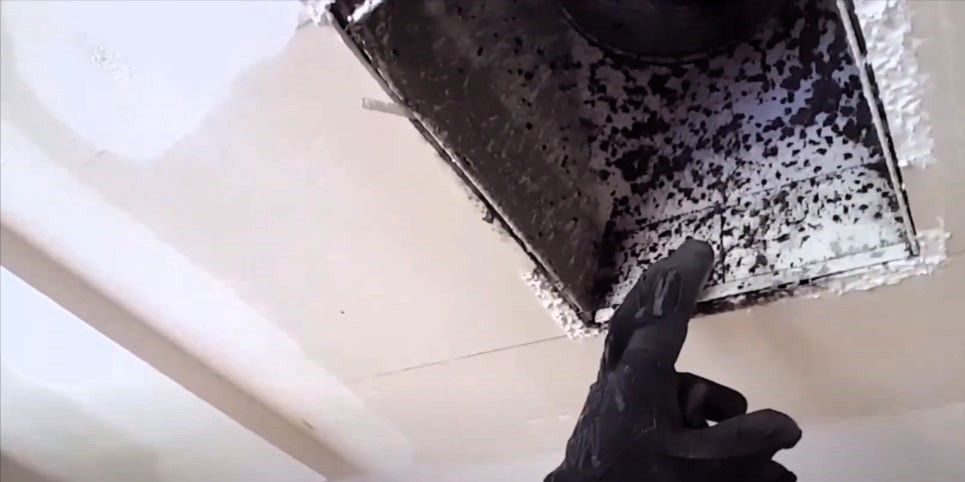
If you've looked inside a return vent and found dust, you've probably wondered:
Do my air ducts need to be cleaned?
Maybe.
Air ducts naturally collect some dust over time, and seeing dust on a register doesn't automatically mean you need professional cleaning. But excessive debris, pest contamination and other problems inside an HVAC system can make cleaning worth considering.
The important part is understanding why you're having the system cleaned and what you're actually paying someone to clean.
This guide covers the basics.
What Is Air Duct Cleaning?
Air duct cleaning is the process of removing accumulated dust, debris and other contaminants from the ductwork and accessible components of a forced-air heating and cooling system.
Despite the name, a thorough professional service involves more than cleaning the ducts you can see through your registers.
Depending on the system and scope of the service, this can include:
- Supply ducts
- Return ducts
- Registers and grilles
- Main trunk lines
- Plenums
- Blower components
- Other accessible HVAC components
Professional cleaners typically use agitation tools to loosen material inside the system while powerful vacuum equipment collects the loosened debris.
The important distinction is source removal: contaminants should be loosened and physically removed from the system rather than simply disturbed or blown farther down the ductwork.
Do Air Ducts Actually Need to Be Cleaned?
Sometimes. But not simply because they're dusty.
A light coating of ordinary household dust inside ductwork is normal and doesn't necessarily justify professional cleaning.
There are stronger reasons to investigate when you find things such as:
Excessive Dust or Debris
Large accumulations inside the ductwork—or particles actually being released from supply registers—can be a reason to consider cleaning.
Pest Contamination
Rodents or insects can enter duct systems and leave nesting material, waste and other debris behind.
The infestation itself should be corrected as well as the contamination it caused.
Contamination After Construction or Remodeling
Renovation can generate enormous amounts of fine dust and debris.
Ideally, supply and return registers should be sealed and the HVAC system kept off during particularly dusty work. If construction debris gets into the system, however, cleaning may be appropriate.
Suspected Mold Growth
This one deserves caution.
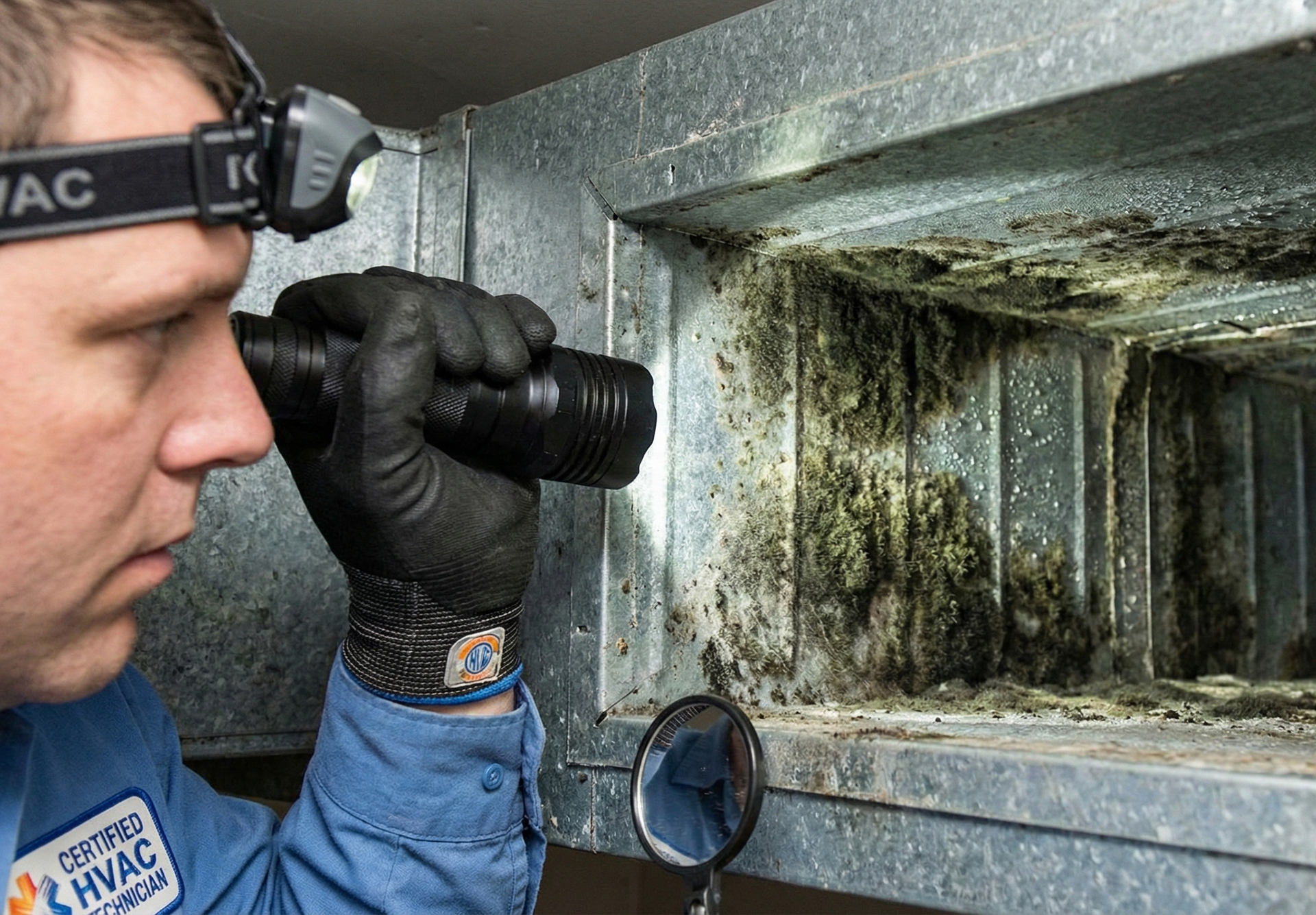
Something that looks like mold isn't necessarily mold, and cleaning alone won't solve a moisture problem that allowed microbial growth to develop in the first place.
If mold is suspected, determine what you're dealing with and identify the moisture source rather than simply spraying something into the ductwork.
Wet or mold-contaminated fiberglass duct material may need replacement rather than cleaning.
What Doesn't Automatically Mean You Need Duct Cleaning?
Dust on Your Return Registers
Return grilles commonly collect dust because air is constantly being pulled through them.
A dusty grille does not, by itself, mean the entire duct system is heavily contaminated.
Remove and clean the grille and inspect farther into the system before assuming you need professional cleaning.
It's Been Three or Five Years
There isn't a universal countdown after which every house suddenly needs duct cleaning.
Homes and HVAC systems are different.
A house that has undergone extensive remodeling, for example, may have a very different duct system from a similar house that hasn't.
The condition of the system is more useful than an arbitrary date on the calendar.
Will Air Duct Cleaning Improve Indoor Air Quality?
This is where duct-cleaning marketing often gets ahead of the evidence.
Your HVAC system can contain dust and other contaminants, but dirty ducts are only one potential source of particles inside a home.
Cooking, cleaning, smoking, pets, outdoor air and normal household activity can all contribute particles to indoor air.
Professional cleaning can physically remove accumulated material from a contaminated HVAC system. But duct cleaning should not be presented as a treatment for allergies, asthma or other health conditions, and it isn't accurate to promise that cleaning your ducts will make you healthier.
If you're experiencing unexplained health symptoms that you believe may be related to your indoor environment, speak with an appropriate healthcare professional rather than relying on duct cleaning as a medical solution.

Does Air Duct Cleaning Lower Your Energy Bills?
Don't count on duct cleaning alone to produce dramatic energy savings.
Heavy contamination of certain HVAC components can interfere with system operation, and keeping HVAC equipment properly maintained is important.
But cleaning the ductwork itself isn't a guaranteed way to lower your utility bill.
If high heating or cooling costs are your concern, the condition of the HVAC equipment, filters, duct leakage, insulation, thermostat settings and other factors may be more important to investigate.
What Does Professional Air Duct Cleaning Actually Look Like?
There are different types of professional equipment, but a thorough cleaning generally involves two fundamental things:
Loosening contaminants from surfaces
and
Collecting those contaminants under negative pressure.
Here's what that looks like in practice.
1. Inspect the System
The technician should understand the system being cleaned and identify access points before beginning.
This is also an opportunity to document conditions inside the ductwork.
2. Protect the Home
Professional cleaning shouldn't create a new dust problem inside your house.
Floors, furnishings and areas surrounding the work should be protected as appropriate.
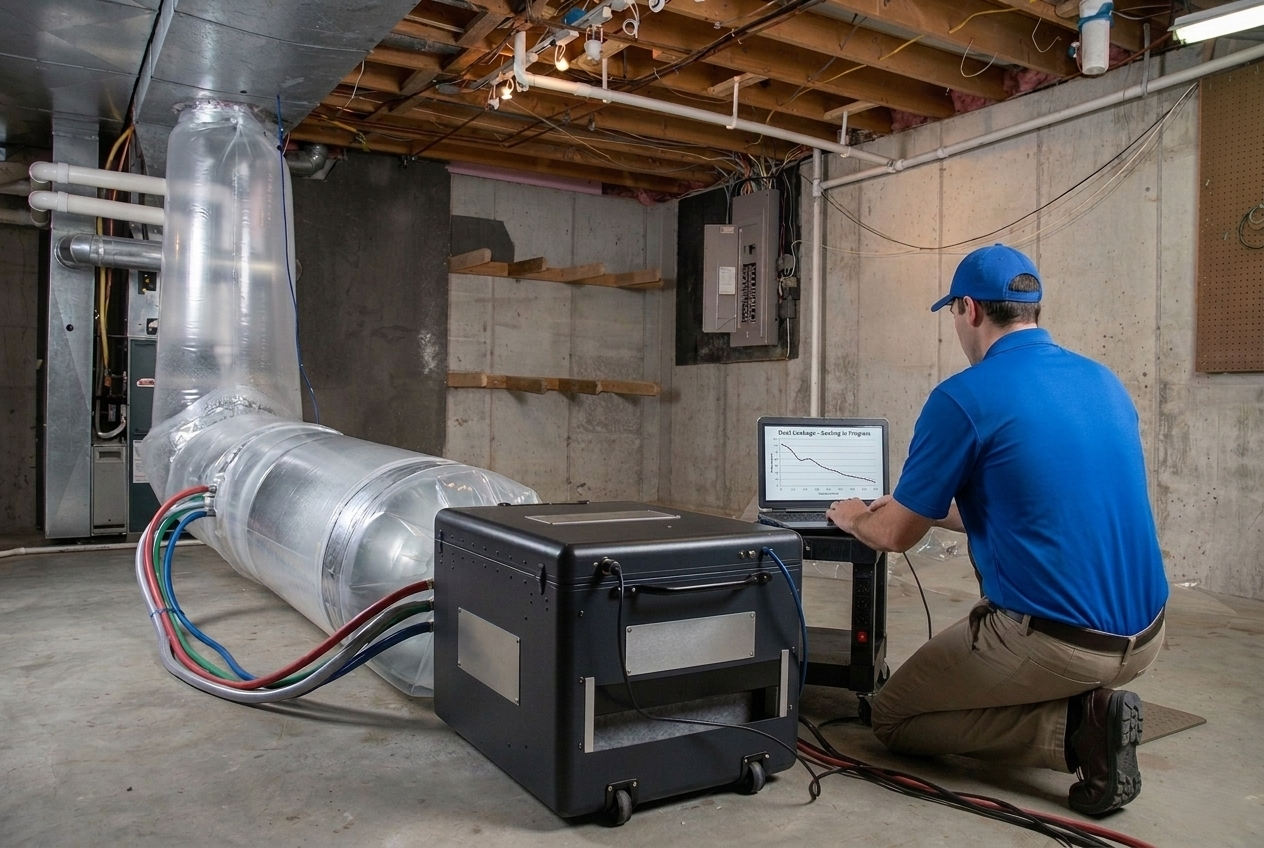
3. Put the HVAC System Under Negative Pressure
Powerful vacuum equipment is connected to the duct system.
This creates negative pressure so debris loosened during cleaning is pulled toward the collection equipment rather than released into the living space.
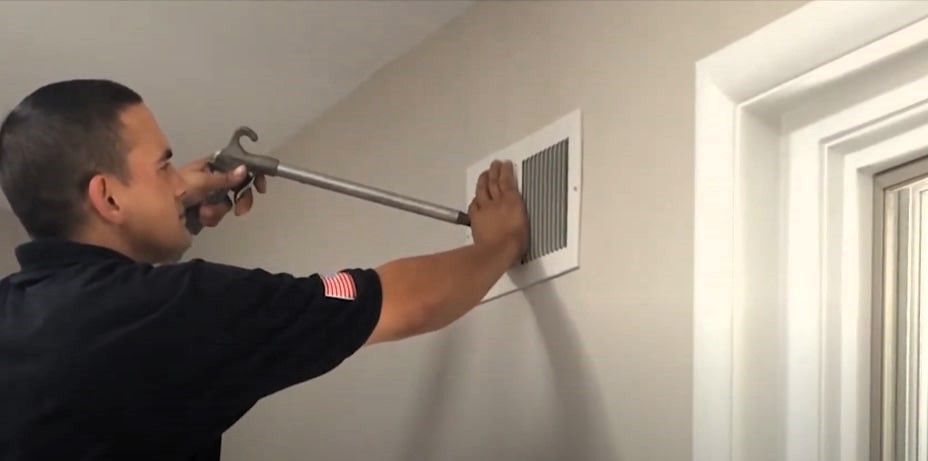
4. Agitate the Debris
Vacuum pressure alone isn't always enough to remove material adhering to duct surfaces.
Professional cleaners can use tools such as compressed-air devices, air whips and brushes to loosen accumulated material.
5. Clean the Supply and Return Sides
Both sides matter.
Cleaning only easily accessible registers while ignoring the remainder of the system is not the same as a thorough HVAC cleaning.
6. Clean Appropriate HVAC Components
Depending on the scope of work and the system, cleaning can extend beyond the duct runs to components such as plenums and blower assemblies.
Ask your contractor exactly which components are included in the quoted service.
7. Properly Close Access Points
Professional cleaning may require creating access openings in sheet-metal ductwork.
Those openings should be properly closed after cleaning rather than left leaking air.
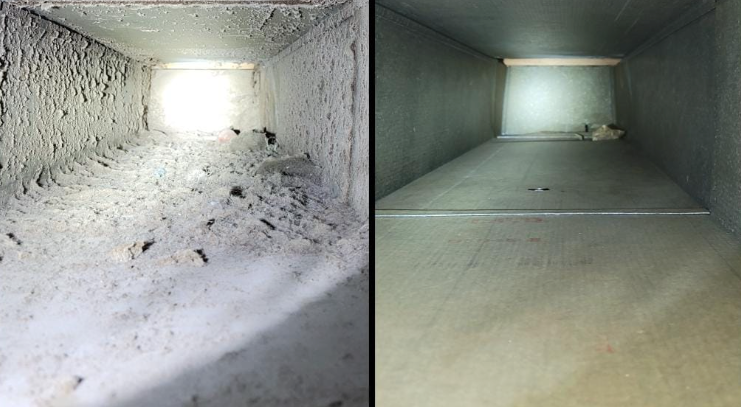
8. Verify the Results
You shouldn't have to simply trust that inaccessible areas were cleaned.
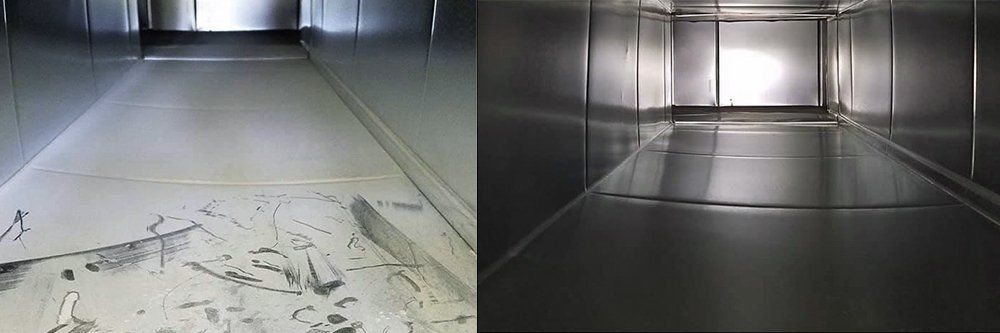
A visual inspection is one of the best ways to verify the result. Before-and-after photographs can help document conditions inside areas you can't easily see yourself.
What Does The Air Duct Cleaning Process Include?
At Grand Rapids' Duct Cleaners, we've been cleaning air ducts in West Michigan for more than 20 years.
Our process includes:
- Protecting floors and corners before work begins
- Connecting industry-specific vacuum equipment to the HVAC system
- Putting the supply and return sides under negative pressure
- Cleaning individual supply registers and runs
- Cleaning return grilles, shafts and drops
- Cleaning supply and return main trunks
- Cleaning plenums
- Cleaning the furnace boot/drop and filter box
- Cleaning the blower motor and blower compartment
- Properly closing access points after cleaning
- Taking before-and-after photographs
This isn't a technician spending a few minutes vacuuming your registers. It's a process designed to remove accumulated material from the system.
[SEE OUR AIR DUCT CLEANING SERVICE]
How Long Does Air Duct Cleaning Take?
For many homes, professional air duct cleaning takes approximately three to five hours.
The actual time depends on factors such as:
- Size of the home
- Number of HVAC systems
- Amount of ductwork
- Number of supply and return runs
- Accessibility
- Condition of the system
- Amount of accumulated material
A large or complicated system can take longer.
Be cautious about anyone promising to thoroughly clean an entire HVAC system in an unusually short amount of time without first knowing anything about the system.
How Much Does Air Duct Cleaning Cost?
There isn't one price that accurately applies to every house.
Pricing can depend on:
- Size of the system
- Number of systems
- Amount of ductwork
- Number of vents
- Accessibility
- Level of contamination
- Scope of work being performed
This is one reason extremely cheap “whole-house” specials deserve closer examination.
Before comparing prices, compare what is actually included.
A $399 service that addresses only a small portion of the system isn't necessarily cheaper than a more expensive quote for substantially more work.
How Do You Choose a Good Air Duct Cleaning Company?
Don't choose based on price alone.
Before hiring someone, ask:
What exactly will you clean?
Get a clear explanation of which supply ducts, return ducts and HVAC components are included.
What equipment will you use?
The company should be able to explain how it loosens and collects contaminants.
Will the system remain under negative pressure during cleaning?
This is an important part of containing and collecting loosened debris.
Will you clean both the supply and return sides?
Ask rather than assuming.
Will you show me what you found?
A reputable contractor should be willing to explain why cleaning is warranted.
Can I see the results?
Before-and-after photographs or another visual inspection can help verify that the work was performed.
Are you properly licensed?
Ask about any licensing required for the work being performed in your state.
Do you use subcontractors?
Know who is actually going to enter your home and perform the service.
Are you NADCA certified?
If a company claims NADCA certification or membership, ask what credential it holds and verify it.
What Is a “Blow-and-Go” Duct Cleaner?
“Blow-and-go” is an industry term commonly used for companies that advertise extremely inexpensive duct cleaning and then provide inadequate service, aggressively upsell the customer or both.
The advertised price isn't the issue by itself.
The question is what work you're actually getting for that price.
Warning signs can include:
- A surprisingly low whole-house price without asking about the home
- Vague answers about what gets cleaned
- Very short expected appointment times
- Cleaning only registers or easily accessible ductwork
- High-pressure upsells once the technician arrives
- Claims that every home has dangerous mold
- Sweeping promises about curing allergies or other health problems
Ask for the scope and total price before work begins.
[READ OUR GUIDE TO DUCT CLEANING SCAMS]
What About Air Duct Sanitizing?
Sanitizing and disinfecting are not substitutes for physically removing dust and debris.
If a chemical treatment is being proposed, ask:
- Why is it necessary?
- What exact product will be used?
- Where will it be applied?
- Is the product registered for that specific use?
- What are the label instructions and precautions?
Chemical treatments should not simply be sprayed into a dirty HVAC system as an alternative to mechanical cleaning.
If microbial contamination is present, the underlying moisture problem also needs to be corrected or the problem can return.
How Can I Keep My Air Ducts Cleaner?
You can't prevent every particle from entering an HVAC system, but basic maintenance can help reduce contamination.
Use the Correct HVAC Filter
Use a filter with an efficiency appropriate for your HVAC system rather than simply buying the highest-rated filter you can find.
Change Filters When Needed
Don't allow filters to become heavily clogged.
How often they need replacement depends on the filter, HVAC system and conditions inside the home.
Prevent Air From Bypassing the Filter
A filter can't do its job if air is traveling through gaps around it.
Control Moisture
Water and excessive moisture inside an HVAC system can create much more serious problems than ordinary household dust.
Repair leaks and address condensation or drainage problems promptly.
Protect the System During Remodeling
Dust-producing construction can send huge quantities of debris through a house.
Protect supply and return openings and avoid operating the HVAC system during dusty work when appropriate.
Keep Registers Clean
Vacuuming or wiping accessible registers keeps ordinary surface dust from accumulating and also makes it easier to notice when something unusual is occurring.
Air Duct Cleaning FAQs
Is Air Duct Cleaning Worth It?
It can be when there is a specific problem to address, such as excessive debris, pest contamination or other significant contamination inside the system.
A light coating of ordinary household dust doesn't automatically mean professional cleaning is necessary.
How Often Should Air Ducts Be Cleaned?
There isn't one cleaning interval appropriate for every home.
The condition of the HVAC system is more important than simply counting years since the previous cleaning.
Can I Clean My Air Ducts Myself?
You can clean registers and areas immediately accessible to you, but thoroughly cleaning an HVAC system requires reaching areas that aren't readily accessible and controlling loosened debris while it is removed.
Does Air Duct Cleaning Remove Mold?
Physical cleaning can remove contamination from some hard surfaces, but suspected mold requires more than simply cleaning what you can see. The moisture source must be identified and corrected, and wet or mold-contaminated fiberglass duct material may require replacement.
Should Air Ducts Be Sanitized After Cleaning?
Not automatically. Chemical treatments should have a specific reason for being used and should only be applied in accordance with the product's approved use and label instructions.
How Can I Tell Whether My Ducts Were Actually Cleaned?
Ask to see the results. A visual inspection—and photographs of areas you can't easily access yourself—can help verify that visible debris has been removed.
Need Professional Air Duct Cleaning in West Michigan?
If you've looked inside your ductwork and aren't sure whether what you're seeing warrants professional cleaning, give us a call.
We have been cleaning air ducts throughout West Michigan for more than 20 years. We'll answer your questions and explain what professional cleaning involves.
Your Grand Rapids Duct Cleaners
Serving Grand Rapids and surrounding West Michigan communities

Grand Rapids Duct Cleaners
You might also like