Duct Repair vs. Replacement: How to Know Which You Need
Finding damaged ductwork doesn't necessarily mean you need a completely new duct system.
A leaking joint may simply need to be sealed. A disconnected section may be able to be reconnected. Even some physically damaged ductwork can be repaired without replacing everything.
Other problems are more extensive.
Badly crushed flexible duct, deteriorated materials, widespread damage or a duct system with significant problems throughout may make replacement of affected sections—or, in some cases, more extensive replacement—the better option.
So how do you know which you need?
It comes down to what's wrong with the ductwork, how extensive the problem is and whether the existing ducts can be restored to proper condition.
What's the Difference Between Duct Repair and Replacement?
Duct repair keeps existing ductwork in place while correcting a specific problem.
That might involve:
- Sealing leaking joints or seams
- Reconnecting separated duct sections
- Repairing damaged connections
- Correcting localized damage
- Replacing a damaged portion while leaving the rest of the system intact
Duct replacement removes ductwork that is no longer suitable for continued use and installs new material in its place.
Replacement doesn't necessarily mean replacing the entire duct system.
Sometimes the right solution is simply replacing one damaged section.
When Can Ductwork Usually Be Repaired?
Repair often makes sense when the problem is localized and the surrounding ductwork is still in good condition.
Here are some examples.
1. Leaking Joints and Seams
A leak doesn't automatically mean a duct needs replacement.
If the duct itself is sound but air is escaping through an improperly sealed joint or seam, the appropriate solution may simply be to seal it correctly.
[LEARN MORE ABOUT AIR DUCT SEALING →]
2. A Disconnected Duct
Sometimes sections of ductwork separate at a connection.
If the ducts themselves are still in usable condition, they may be able to be properly reconnected and sealed rather than replaced.
3. Localized Physical Damage
Damage confined to one accessible area doesn't necessarily justify replacing an entire duct system.
Depending on the material and extent of the damage, the affected area may be repairable or only that section may need replacement.
4. An Isolated Flex-Duct Problem
If one run of flexible duct is damaged while the rest of the system is in good condition, addressing that particular run may be sufficient.
The important distinction is between an isolated defect and a larger problem affecting much of the system.
When Might Ductwork Need to Be Replaced?
There isn't a single age or symptom that automatically means “replace the ducts.”
Replacement becomes more reasonable when the existing material can't be reliably restored to proper condition.
1. The Duct Is Badly Crushed or Damaged
Sealing materials can't restore the shape of badly crushed ductwork.
Severely damaged sections may need to be replaced.
2. Flexible Duct Is Torn or Deteriorated
A small problem at a connection is different from extensive damage to the duct itself.
When the inner duct, insulation or outer jacket has significant damage, replacing the affected section may be more appropriate than trying to patch it repeatedly.
3. Damage Is Widespread
One leaking connection is a repair.
Numerous deteriorated or damaged sections throughout a system present a different decision.
At some point, repeatedly repairing individual problems can become less practical than replacing larger portions of the ductwork.
4. The Duct Material Itself Is No Longer Serviceable
Sometimes the problem isn't a seam or connection—the duct material itself is damaged or deteriorated.
If the underlying material can't be returned to suitable condition, replacement may be necessary.
5. The Existing Duct System Has Fundamental Design Problems
Not every airflow problem is caused by a leak.
Ductwork can also have problems involving:
- Improper sizing
- Poor routing
- Excessive restrictions
- Inadequate return-air pathways
- Poor system design
Simply sealing a poorly designed system won't correct those underlying issues.
Significant design problems may require an HVAC professional to evaluate whether portions of the distribution system need to be modified or replaced.
Does Old Ductwork Automatically Need Replacement?
No.
Age alone isn't enough to determine whether ductwork needs replacement.
Different duct materials age differently, and installation quality, environmental conditions and physical damage all matter.
Older metal ductwork that's structurally sound may still be serviceable.
Newer ductwork can have problems if it was poorly installed or has been damaged.
Rather than replacing ducts solely because of their age, look at their actual condition and performance.
What About Rusted Ductwork?
Surface discoloration isn't automatically a reason to replace a duct.
But significant corrosion is different.
If corrosion has weakened the metal or created holes, the condition of the affected section should be evaluated.
It's also important to determine why moisture is reaching the ductwork.
Replacing a corroded section without correcting an ongoing moisture problem may allow the same thing to happen again.
What About Wet or Damaged Duct Insulation?
Insulation and ductwork aren't the same thing.
Damage to exterior duct insulation doesn't necessarily mean the duct underneath needs replacement.
The first questions are:
- Is the actual duct damaged?
- Why did the insulation become wet or damaged?
- Is there an ongoing condensation or moisture problem?
- Can the insulation itself be replaced after the underlying issue is corrected?
Internally lined fiberglass ducts require different consideration because the insulating material is exposed to the air stream.
The EPA advises that wet or mold-contaminated insulated duct material generally can't simply be cleaned and should be removed and replaced.
[LEARN MORE ABOUT DUCT INSULATION →]
Repairing Flex Duct vs. Replacing It
Flexible duct deserves special attention because its construction differs from rigid metal ductwork.
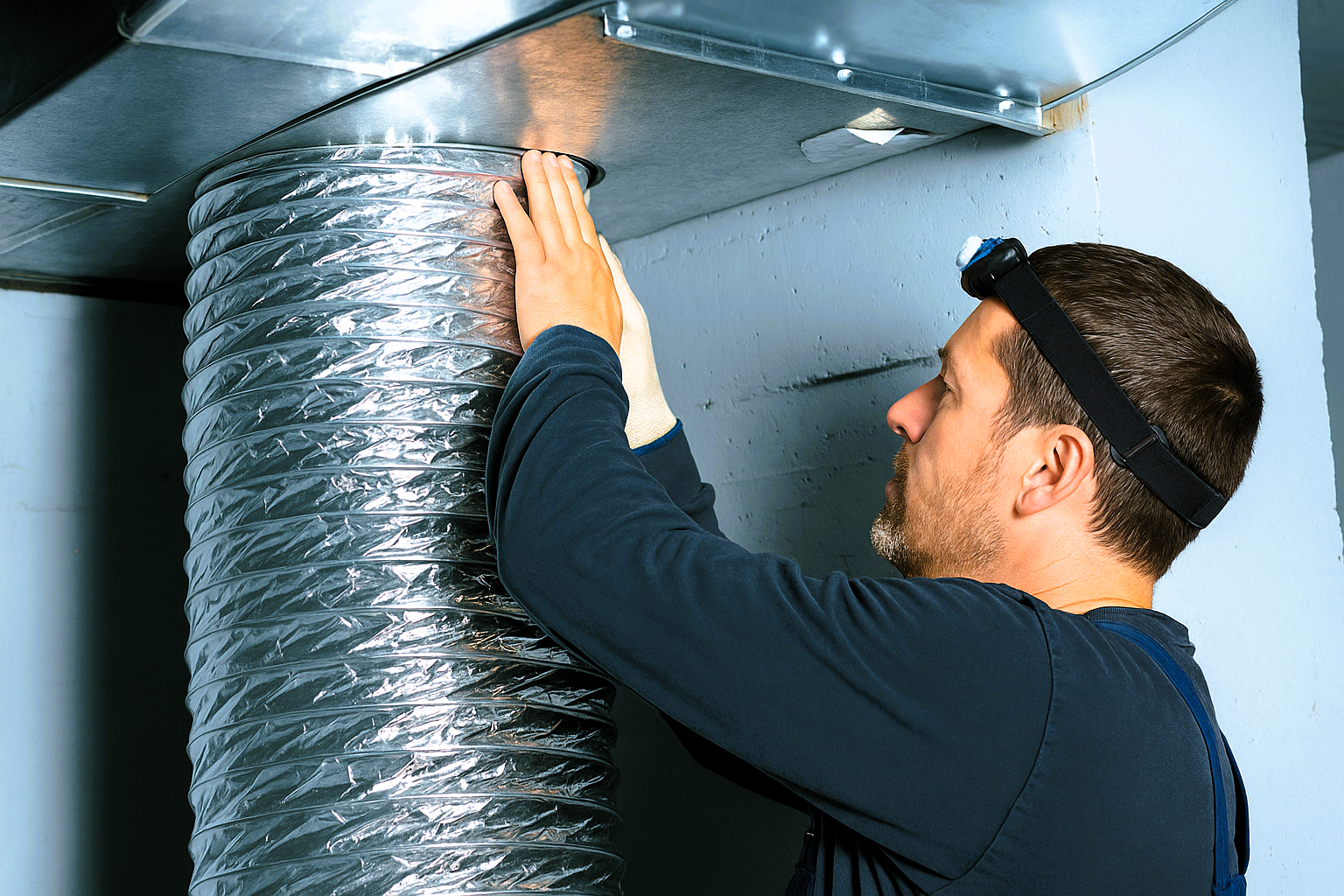
A typical insulated flex duct includes an inner flexible duct, surrounding insulation and an exterior jacket.
Problems can include:
- Disconnected ends
- Tears
- Crushed sections
- Severe kinks
- Damaged insulation
- Damaged exterior jackets
A connection problem may be repairable.
A badly crushed, torn or deteriorated section may be better replaced.
And replacing one flex-duct run doesn't mean the rest of the duct system needs to be replaced.
Is It Better to Patch a Damaged Duct?
That depends on what “patch” means.
Properly sealing a sound duct joint with material intended for HVAC ductwork is a legitimate repair.
Repeatedly covering significant physical damage with tape is something else.
A repair should correct the underlying defect and leave the duct suitable for continued use.
If the duct itself is no longer serviceable, replacement of that section may be the more appropriate solution.
Should You Repair or Replace Leaky Ducts?
A leak alone usually doesn't answer the question.
If structurally sound ductwork is leaking at joints and seams, sealing may be all that's required.
If air is leaking because the duct is:
- Torn
- Crushed
- Corroded through
- Disconnected
- Otherwise physically damaged
then the underlying damage needs to be addressed.
This is why “duct sealing” and “duct repair” shouldn't be treated as interchangeable terms.
[READ OUR COMPLETE GUIDE TO AIR DUCT SEALING →]
Do You Need to Replace All Your Ductwork at Once?
Not necessarily.
Duct systems contain multiple trunks, branches, fittings and individual runs.
If a problem is confined to one section, it may be possible to repair or replace that section while leaving sound ductwork alone.
Whole-system replacement makes more sense when problems are sufficiently widespread or fundamental that localized repairs no longer address the overall condition of the system.
Be cautious if someone recommends replacing every duct in your home without explaining what is wrong with the existing system and why repair isn't appropriate.
Ask to see the problem.
Repair vs. Replacement: Questions to Ask
If you're trying to decide between repairing and replacing ductwork, these questions can help:
Where is the damage?
One isolated problem is different from defects throughout the system.
What type of ductwork is affected?
Sheet metal, flex duct, fiberglass duct board and internally lined ducts don't necessarily require the same repair approach.
Is the duct itself damaged, or is the problem at a connection?
A leaking joint may only need sealing.
Can the existing material be restored to good condition?
If so, repair may be reasonable.
Is the problem likely to recur?
Repeated failures can indicate a larger issue that needs to be corrected.
Is moisture involved?
Find and correct the moisture source rather than only repairing its effects.
Is the problem actually the ductwork?
Weak airflow, uncomfortable rooms and high energy bills can have causes unrelated to damaged ducts.
Don't replace ductwork until you've identified the actual problem.
Should You Replace Ductwork When Replacing Your HVAC System?
Not automatically.
Installing a new furnace, heat pump or air conditioner doesn't inherently require replacing all of the existing ducts.
But replacing HVAC equipment is a reasonable time to have the distribution system evaluated.
The new equipment still depends on the duct system to move air throughout the house.
Existing leaks, restrictions, damaged sections or design problems don't disappear just because the heating or cooling equipment is new.
If you're making a major HVAC investment, ask whether the existing ductwork is appropriate for the new system and whether any problems need to be corrected.
Can New Ductwork Improve Airflow?
It can when the existing ductwork is the reason for the airflow problem.
For example, correcting a badly crushed or disconnected duct can restore a proper path for air to reach a room.
But replacing ductwork isn't a universal fix for weak airflow.
Problems can also involve:
- Filters
- Blower performance
- HVAC equipment
- Closed or obstructed registers
- System balancing
- Duct sizing and design
Diagnose first. Replace second.
Can You Repair Air Ducts Yourself?
Some minor, accessible duct-sealing work can be DIY-friendly.
For example, ENERGY STAR recommends appropriate mastic or metal-backed foil HVAC tape for sealing accessible duct leaks.
Physical duct repairs are another matter.
Professional help makes more sense when:
- Sections need to be reconnected or replaced
- Flex duct is badly damaged
- Ductwork is difficult to access
- Extensive leakage or damage is present
- The cause of the problem isn't clear
- Duct design or sizing may be involved
Whatever approach you take, don't use ordinary household duct tape as a permanent solution for HVAC duct leaks.
How Much Does Duct Repair or Replacement Cost?
There isn't a meaningful one-size-fits-all price.
The cost can vary substantially depending on:
- What type of ductwork you have
- The extent of the damage
- How much ductwork needs repair or replacement
- Accessibility
- Whether sections need to be removed
- Whether insulation is involved
- The complexity of the duct layout
- Whether other HVAC work is required
Replacing one accessible damaged section is a very different project from replacing an extensive duct system hidden throughout a house.
A quote should be based on the actual scope of work rather than a generic online estimate.
Duct Repair or Replacement? Start With the Actual Problem
The decision doesn't have to begin with:
“How old are my ducts?”
A better question is:
“What's wrong with them?”
If the problem is a leaking joint, seal it.
If a connection has separated, reconnect it.
If one section is damaged beyond reasonable repair, replace that section.
If problems are extensive or involve the design of the system itself, a larger replacement or redesign may be appropriate.
The goal isn't to preserve old ductwork at all costs—or replace good ductwork unnecessarily.
It's to fix the actual problem.
Duct Repair in Grand Rapids, MI
If you've found leaking, damaged or disconnected ductwork, we provide duct sealing and duct repair in Grand Rapids and throughout West Michigan.
We can address leaking connections as well as damaged and disconnected sections and determine whether the affected ductwork can be repaired or needs replacement.
We have worked with residential and commercial duct systems throughout West Michigan for more than 20 years.
[DUCT SEALING & REPAIR IN GRAND RAPIDS →]
Your Grand Rapids Duct Cleaners
Frequently Asked Questions
Is it cheaper to repair or replace ductwork?
A localized repair will generally involve less work than replacing extensive ductwork, but the appropriate choice depends on the condition of the system. Repeatedly repairing ductwork that's extensively damaged may not be the better long-term solution.
How do I know if my ductwork needs to be replaced?
Replacement may be appropriate when duct material is badly damaged, deteriorated or no longer serviceable; when problems are widespread; or when the existing duct system has fundamental design issues that localized repairs can't correct.
Can you replace just one section of ductwork?
Yes. A problem with one section doesn't necessarily require replacement of the entire duct system.
Can disconnected ductwork be repaired?
Often, yes. If the duct sections themselves remain in usable condition, they may be able to be properly reconnected and sealed.
Does leaky ductwork need to be replaced?
Not necessarily. Structurally sound ductwork with leaking joints or seams may only need proper sealing. Physical damage is a separate issue.
Should I replace old ductwork if it isn't damaged?
Age alone isn't enough to determine whether ductwork needs replacement. Its material, condition, design and performance are more useful considerations.
Do you repair ductwork in Grand Rapids?
Yes. We provide duct sealing and duct repair in Grand Rapids and surrounding West Michigan communities. Call 616-208-4445 to discuss the problem and get a quote.

Grand Rapids Duct Cleaners
You might also like