Why Is My House So Dusty? 10 Ways to Reduce Household Dust
You dust the furniture, vacuum the floors and wipe everything down—only to see another layer of dust a few days later.
So where is it all coming from?
Household dust is a mixture of particles from both inside and outside your home. Fibers from clothing and furnishings, skin flakes, pet dander, pollen, soil and other particles can all become part of the dust you see accumulating on surfaces.
And despite what you may have heard, a dusty house doesn't automatically mean you have dirty air ducts.
Your HVAC system can play a role in how particles move through your home, but excessive dust can have many causes.
Before assuming your ducts need cleaning, look at the bigger picture.
Here are some of the most common reasons a house gets dusty—and what you can do about them.
1. Check Your HVAC Filter
Your HVAC filter captures particles as air moves through the return side of your heating and cooling system.
If the filter is heavily loaded with debris, replace it.
There isn't one replacement schedule that's right for every home. Filter type, pets, HVAC use, remodeling and outdoor conditions can all affect how quickly a filter becomes dirty.
Inspect yours periodically and follow the recommendations for your particular filter and HVAC equipment.
Also make sure:
- The filter is the correct size
- It's installed in the proper direction
- It fits correctly without large gaps
- You're using a filtration level appropriate for your HVAC system
Don't automatically buy the highest-MERV filter you can find. Higher-efficiency filters can create more resistance to airflow, so your HVAC system needs to be able to accommodate the filter you choose.
[LEARN MORE ABOUT HVAC AIR FILTERS →]
2. Vacuum Regularly—and Use the Right Vacuum
Dust doesn't stay airborne forever.
Eventually it settles onto:
- Carpet
- Rugs
- Upholstery
- Floors
- Furniture
- Bedding
- Other household surfaces
Regular vacuuming physically removes those particles from the home.
If dust is a significant concern, a vacuum with effective filtration can help keep captured particles from simply being blown back into the room.
Don't forget areas that are easy to overlook, including beneath furniture, along baseboards and on upholstered surfaces.
3. Wash Bedding and Other Textiles
Bedrooms contain a lot of fabric.
Sheets, blankets, pillows, curtains, rugs and clothing can all collect and release particles.
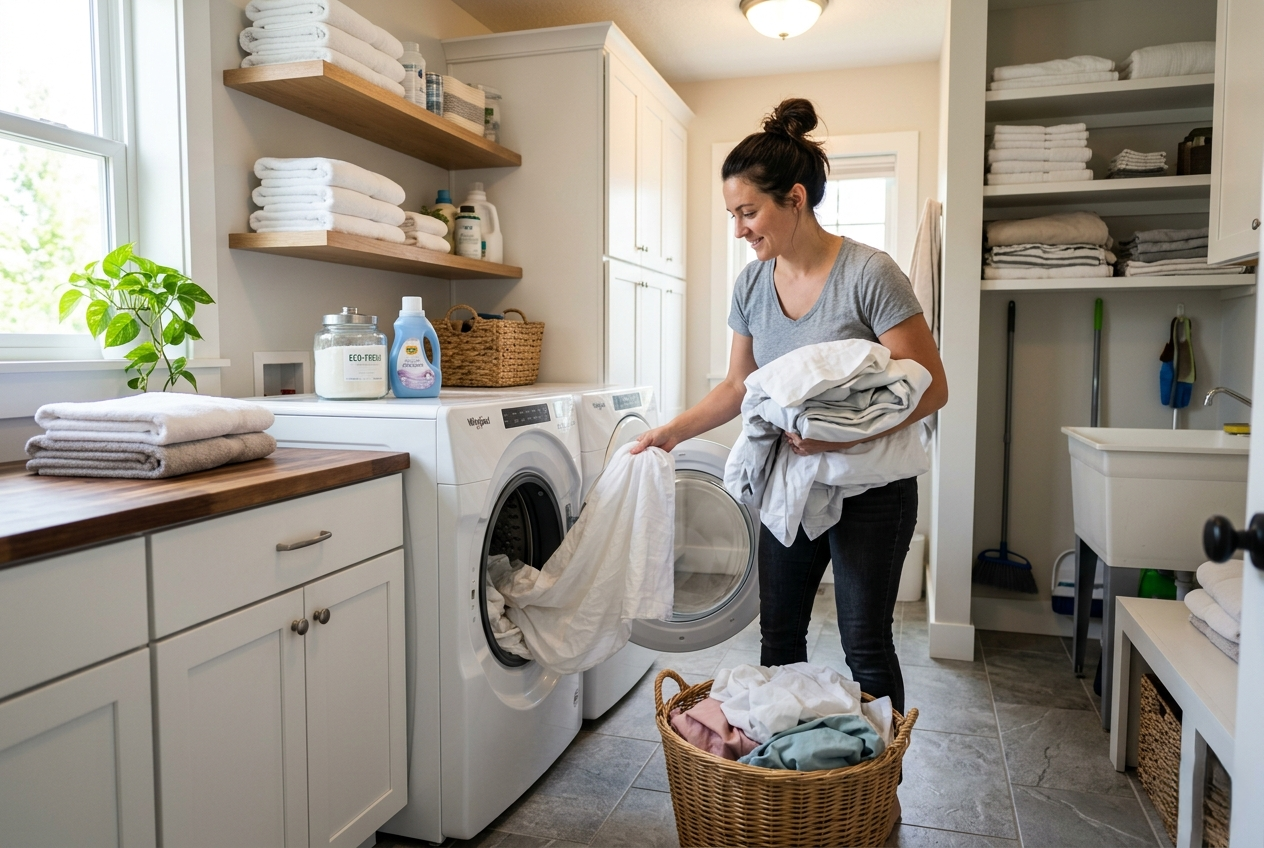
Regularly laundering washable bedding and cleaning other textiles according to their care instructions can help reduce material that eventually becomes household dust.
This is also one reason a home can remain dusty even when the HVAC system is perfectly clean: many of the sources are inside the rooms themselves.
4. Consider Your Pets
Pets can contribute hair, dander and material tracked indoors on paws and coats.
If you have dogs or cats, you may notice:
- Faster filter loading
- More dust and hair on surfaces
- Greater accumulation around returns and registers
Regular grooming, vacuuming and cleaning pet bedding can help control these sources.
Pet ownership doesn't automatically mean your ducts need more frequent professional cleaning.
5. Stop Outdoor Dirt at the Door
A surprising amount of material enters a home from outdoors.
Shoes can track in:
- Soil
- Sand
- Pollen
- Road dust
- Other outdoor particles
Using entrance mats and removing shoes indoors can reduce how much of that material gets distributed throughout the house.
Open windows and doors can also allow outdoor particles to enter, particularly during high-pollen, dusty or smoky conditions.
6. Pay Attention After Remodeling
Construction and renovation can create enormous amounts of fine dust.
Drywall work, sanding, cutting wood, demolition and other projects can release particles that travel far beyond the immediate work area.
Whenever possible, control construction dust at the source and isolate the work area from the rest of the home.
Also check the HVAC filter more frequently during and after the project.
If significant construction debris entered the HVAC system, that's one circumstance in which professional duct cleaning may be worth considering.
[WHEN DOES AIR DUCT CLEANING ACTUALLY MAKE SENSE? →]
7. Clean Return Grilles and Supply Registers
Registers and grilles can collect visible dust simply because air is moving around them.
That doesn't necessarily mean the entire duct system is dirty.
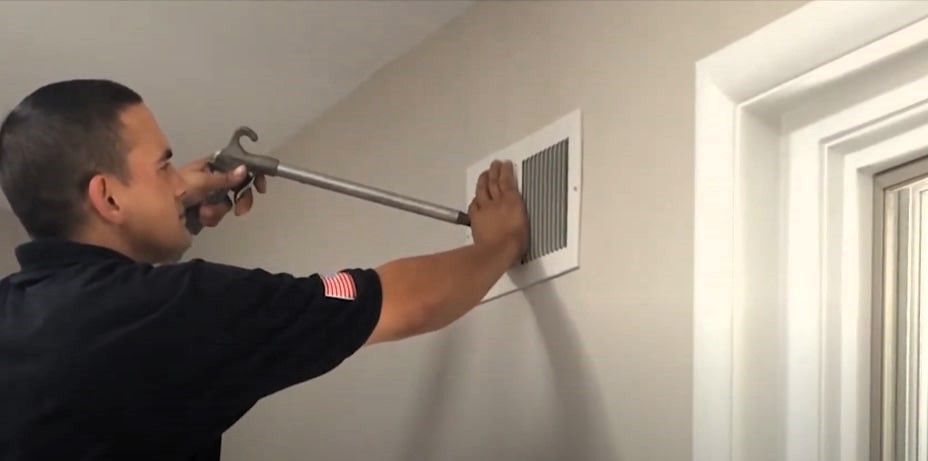
You can usually clean accessible register and grille surfaces as part of normal household cleaning.
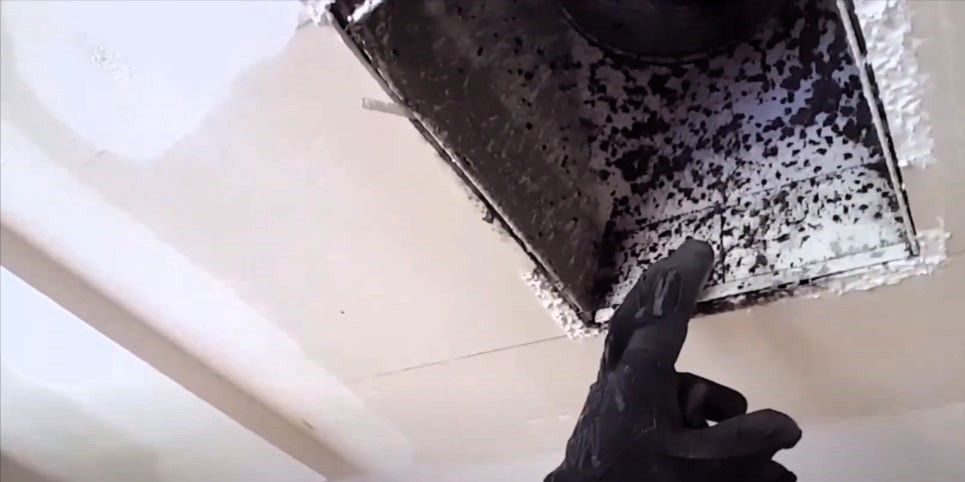
If you remove a register to look inside the duct, a small amount of settled dust isn't automatically cause for concern.
What matters more is whether you find substantial accumulations of debris or another specific contamination problem.
8. Look for Air Leaks and HVAC Problems
Your HVAC system relies on controlled airflow.
Problems with return ducts or other parts of the system can potentially allow dust and debris from areas such as attics, basements or crawlspaces to enter the air stream.
If you see unusual amounts of debris around registers, notice obvious damaged or disconnected ductwork, or suspect an HVAC airflow problem, have the system evaluated by an appropriate HVAC professional.
Cleaning ducts doesn't repair leaks or damaged ductwork.
If debris is entering because of a mechanical problem, that problem needs to be corrected.
9. Don't Forget High and Hidden Surfaces
Some of the biggest dust collectors are the places you don't see every day.
Check:
- Ceiling fan blades
- Tops of cabinets
- Blinds
- Window sills
- Shelving
- Light fixtures
- Behind furniture
- Under beds
- Tops of door and window trim
Air movement and normal household activity can disturb accumulated material and put some of it back into the air.
Occasionally cleaning these surfaces can make a noticeable difference in how quickly visible dust returns.
10. Find the Source Instead of Chasing the Dust
If your home suddenly becomes much dustier than usual, ask what changed.
Did you recently:
- Start a remodeling project?
- Adopt a pet?
- Open the windows more often?
- Experience nearby construction?
- Change HVAC filters?
- Have work performed in an attic or crawlspace?
- Notice damaged ductwork?
- Start using the HVAC system more frequently?
A sudden change can provide a clue.
The goal isn't simply to remove the dust you can see.
It's to determine where unusually large amounts of it are coming from.
Are Dirty Air Ducts Making My House Dusty?
Possibly—but don't assume they are.
This is one of the biggest misconceptions surrounding air duct cleaning.
EPA notes that much of the dirt that accumulates inside air ducts adheres to duct surfaces and does not necessarily enter the living space.
EPA also says there is no evidence that a light amount of household dust or other particulate matter inside air ducts poses a health risk.
So if you see some dust when you look through a register, don't panic.
That's different from a system containing substantial accumulated debris.
How Do You Know If Your Air Ducts Are Actually Dirty?
The best evidence is the condition of the system itself.
Look for things such as:
- Substantial accumulations of dust and debris
- Debris visibly being released from supply registers
- Heavy contamination after construction or renovation
- Evidence of rodents or other vermin
- Substantial visible mold growth on appropriate HVAC surfaces
If a duct-cleaning company tells you your system is extremely dirty, ask them to show you.
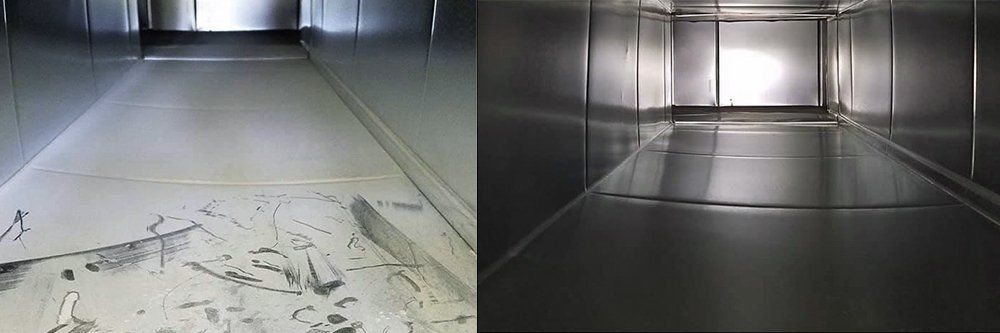
Before-and-after photographs are particularly useful because much of the duct system isn't visible from the room.
Will Air Duct Cleaning Stop Dust From Coming Back?
No.
Professional duct cleaning can remove accumulated material from inside the HVAC system.
It can't eliminate all of the sources of household dust.
People, pets, textiles, outdoor air, soil and everyday activities will continue generating or introducing particles after the ducts have been cleaned.
That's why you should be skeptical of anyone promising a “dust-free home” after duct cleaning.
A more realistic goal is to remove substantial contamination from the HVAC system when that contamination is actually present.
Should Air Ducts Be Cleaned on a Schedule?
Not necessarily.
You may encounter recommendations to have your ducts cleaned every year, every three years or every five years.
EPA does not recommend routine duct cleaning on a fixed schedule.
Instead, consider the actual condition of your HVAC system.
Professional cleaning becomes more reasonable when there is a specific reason for it rather than simply because a certain number of years have passed.
Can I Prevent Dust From Getting Into My Air Ducts?
You probably can't prevent every particle from entering your HVAC system.
But good household and HVAC maintenance can help limit unnecessary accumulation.
That includes:
- Using an appropriate HVAC filter
- Installing it correctly
- Checking it regularly
- Controlling renovation dust
- Keeping registers and return grilles clean
- Vacuuming and cleaning household surfaces
- Addressing damaged ductwork or HVAC problems
- Controlling pest problems
These practices make sense whether or not you've ever had your ducts professionally cleaned.
When Is Air Duct Cleaning Worth Considering?
EPA suggests considering duct cleaning when:
- There is substantial visible mold growth inside hard-surface ducts or other HVAC components
- Ducts are infested with rodents, insects or other vermin
- Ducts are clogged with excessive amounts of dust and debris and particles are actually being released into the home
Construction debris or another unusual contamination event can also give you a practical reason to have the system evaluated.
The important distinction is evidence.
Don't schedule duct cleaning solely because your coffee table gets dusty.
Look for evidence that the HVAC system itself contains substantial contamination.
What Professional Duct Cleaning Should Include
If your system does need cleaning, the job should involve more than vacuuming around the registers.
Our air duct cleaning process addresses the system much more thoroughly.
Our technicians use professional vacuum equipment to place the system under negative pressure while cleaning individual supply runs, return ductwork, main trunks, plenums and accessible HVAC components included in the service.
We use agitation tools to loosen accumulated material so it can be removed through the vacuum system.
And we provide before-and-after photos so you can see the condition of the areas we've cleaned.
[SEE HOW PROFESSIONAL AIR DUCT CLEANING WORKS →]
Air Duct Cleaning in Grand Rapids
If you've checked the common sources of household dust and have reason to believe substantial debris has accumulated inside your HVAC system, we can help you determine whether professional cleaning makes sense.
We have provided air duct cleaning throughout Grand Rapids and West Michigan for more than 20 years.
We use our own trained technicians—no subcontractors—and professional equipment designed for whole-system duct cleaning.
[AIR DUCT CLEANING IN GRAND RAPIDS →]
Your Grand Rapids Duct Cleaners

Grand Rapids Duct Cleaners
You might also like