How to Spot Mold in Your Air Ducts — and What to Do Next
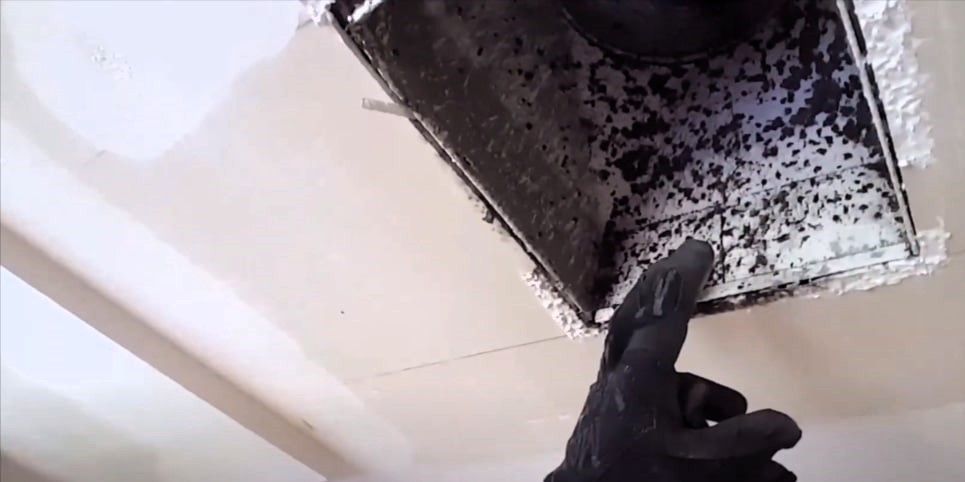
You look inside an air vent and see dark spots.
Is it mold?
Maybe—but color and appearance alone aren't enough to know for sure.
Dust, dirt, soot and other deposits can sometimes resemble mold inside an HVAC system. And because much of your ductwork is hidden, figuring out what's actually happening can be difficult.
According to the U.S. Environmental Protection Agency (EPA), a substance that looks like mold may need to be evaluated by an expert—and in some cases tested—to determine whether it really is mold.
So rather than trying to identify a specific type of mold from a photo or its color, start with the things you can reasonably observe.
What Does Mold in Air Ducts Look Like?
Mold doesn't have one universal appearance.
Possible biological growth can appear as spots, patches or discoloration on surfaces inside the HVAC system.
But here's the important part:
You can't reliably identify mold—or a particular species of mold—just by looking at its color.
Black material isn't automatically “black mold.”
White material isn't necessarily mold either.
If a duct cleaning or HVAC company tells you that you have mold, EPA recommends asking them to show you exactly where the suspected growth is located.
That's especially important because many portions of an HVAC system aren't easily visible from the registers.
Signs That Are Worth Investigating
None of the following automatically proves that you have mold in your air ducts.
But they can give you a reason to investigate further.
1. Visible Growth Inside the HVAC System
This is the most obvious reason to take a closer look.
You may notice suspicious growth:
- Behind a supply register
- Around a return grille
- Inside accessible sheet-metal ductwork
- On or near HVAC components
- Around areas where condensation has occurred
Seeing suspicious material doesn't tell you exactly what it is, but substantial visible growth inside the system deserves further investigation.
2. A Persistent Musty Odor
A persistent musty or moldy odor can be another clue, particularly if it becomes noticeable when the HVAC system runs.
However, an odor doesn't tell you where the problem is.
The source could be within the HVAC system, but it could also be somewhere else in the house.
Hidden moisture problems can occur behind walls, beneath flooring, around plumbing and in other areas that aren't immediately visible.
Treat the smell as a reason to investigate—not proof that your ducts contain mold.
3. Moisture or Condensation Around the HVAC System
Mold requires moisture to grow.
That's why evidence of a moisture problem may be more important than the color of a suspicious spot.
Potential HVAC-related moisture problems can include:
- Standing water
- Condensation
- Wet insulation
- Drainage problems
- Plumbing or roof leaks affecting nearby materials
- Problems around cooling coils or drain pans
- Excessive humidity
EPA describes moisture control as the key to mold control.
If you find mold but don't identify and correct the moisture source, the problem can return after cleaning.
4. Wet or Moldy Duct Insulation
Not every duct system is made entirely from bare sheet metal.
Some systems contain fiberglass duct board or internal fiberglass insulation.
That distinction matters.
EPA says wet or moldy fiberglass duct material generally cannot be effectively cleaned and should be removed and replaced.
So before deciding that a mold problem can simply be “cleaned out,” determine what type of material is actually contaminated.
Can You Tell What Kind of Mold It Is by Looking at It?
No.
Photos and color aren't reliable ways to identify a particular mold species.
For example, homeowners sometimes see dark growth and immediately assume they've found “black mold.”
Dark coloration by itself doesn't establish what organism is present or what risks it poses.
If identifying the substance is important to deciding what to do next, professional evaluation—and sometimes laboratory analysis—may be appropriate.
Can Mold Grow Inside Air Ducts?
It can, but the conditions matter.
Mold needs moisture.
When moisture and dirt are present inside an HVAC system, conditions may support biological growth.
That means discovering suspected mold should lead to another question:
Where is the moisture coming from?
Simply removing visible material without correcting the underlying moisture problem doesn't solve the cause.
EPA specifically warns that if the conditions responsible for mold growth aren't corrected, the growth can recur.
Where Does HVAC Moisture Come From?
The exact cause varies from house to house.
Potential sources can include:
Condensation
Cooling equipment naturally deals with moisture. Problems with condensation management can create persistently damp areas.
Drain Pan or Condensate Problems
Cooling systems remove moisture from indoor air. That water needs to drain properly.
Standing water around cooling components deserves investigation.
Water Leaks
Roof, plumbing or other leaks can wet ductwork or nearby insulation.
Excessive Indoor Humidity
High humidity can contribute to condensation and other moisture problems.
Wet Building Materials
Insulation and other porous materials around the HVAC system can retain moisture after leaks or water damage.
Finding and correcting the source is an essential part of dealing with mold.
Should You Have Air Ducts Cleaned If You Find Mold?
Sometimes.
EPA says homeowners should consider duct cleaning when there is substantial visible mold growth inside hard-surface ducts or on other HVAC components.
But the type of duct material matters.
Hard-Surface Ductwork
Contamination on accessible hard surfaces may be removable through appropriate cleaning.
Fiberglass-Lined or Fiberglass Duct Material
This is different.
EPA, NADCA and the North American Insulation Manufacturers Association recommend replacing wet or moldy fiberglass duct material rather than simply cleaning it.
That's why a contractor should understand what your duct system is made from before recommending a solution.
Does Air Duct Cleaning Prevent Mold From Coming Back?
Not by itself.
Cleaning can remove contamination from surfaces that can appropriately be cleaned.
It doesn't repair the condition that allowed mold to grow.
If condensation, standing water, a leak or another moisture source remains, biological growth may return.
Think of these as two separate jobs:
1. Address the contamination.
2. Correct the moisture problem that caused it.
Doing only the first leaves the underlying problem unresolved.
Should You Spray Mold Killer or Bleach Into Your Air Ducts?
Don't start spraying household chemicals into the duct system.
Products used inside HVAC systems have specific requirements, and not every antimicrobial product is approved for every duct material or application.
EPA regulates antimicrobial pesticides and requires them to be used according to their approved labeling.
EPA also says biocides should not be considered a substitute for physically removing contamination and correcting the moisture problem.
If a duct cleaner recommends a sanitizer, disinfectant or other chemical treatment, ask:
- What is the exact product?
- Why is it necessary?
- Where will it be applied?
- What material are my ducts made from?
- Is the product labeled for that specific application?
- Has the visible contamination already been physically removed?
- What is being done to correct the moisture source?
Don't agree to a chemical treatment simply because it's presented as a standard add-on to duct cleaning.
What About Ozone or UV Lights?
Be cautious about products presented as an automatic solution to mold.
Killing microorganisms doesn't eliminate the moisture condition that allowed them to grow, and physically removing contamination can still be necessary.
EPA specifically cautions consumers about introducing ozone into duct systems and notes concerns about its use.
UV equipment is a separate technology and may be used in some HVAC applications, but installing a UV light doesn't replace identifying moisture problems or appropriately addressing existing contamination.
If someone recommends additional equipment, ask what specific problem it's intended to solve and what evidence supports using it in your particular HVAC system.
Can Mold in Air Ducts Make You Sick?
Mold exposure can affect people differently, and health questions are better addressed with a healthcare professional than a duct-cleaning company.
More importantly, symptoms alone can't tell you whether mold is growing inside your ductwork.
EPA notes that duct cleaning has not been shown to prevent health problems, and research has not conclusively demonstrated that household particle levels increase because of dirty ducts or decrease after duct cleaning.
If you're experiencing unexplained health symptoms, don't assume dirty or moldy air ducts are the cause.
Investigate the building conditions and discuss health concerns with an appropriate healthcare professional.
What Should You Do If You Think There's Mold in Your Air Ducts?
Start with evidence rather than assumptions.
1. Look for visible contamination.
Check areas you can safely access, such as registers, grilles and visible HVAC components.
2. Look for moisture.
Check for leaks, condensation, standing water or wet insulation.
3. Don't identify mold by color alone.
Dark material isn't automatically dangerous mold.
4. Ask contractors to show you what they found.
Don't accept a mold diagnosis based solely on what you're told.
5. Determine what material is contaminated.
Hard-surface ductwork and fiberglass duct materials may require very different responses.
6. Correct the moisture problem.
Cleaning without moisture control can allow the problem to return.
7. Get appropriate professional help when needed.
A significant mold or water-damage problem may require expertise beyond ordinary air duct cleaning.
Be Wary of the “You Have Toxic Mold” Upsell
Unfortunately, mold can also be used as a pressure tactic.
A contractor advertises inexpensive duct cleaning, arrives at the home and suddenly discovers a frightening mold problem requiring an expensive treatment.
That doesn't mean every contractor who discovers mold is dishonest.
It means you should ask for evidence before authorizing expensive additional work.
Ask the contractor to:
- Show you the suspected growth
- Explain how they determined what it is
- Identify the affected part of the system
- Explain the proposed treatment
- Identify any chemical product they intend to use
- Explain how the moisture source will be addressed
If you're being pressured to make an immediate decision, getting another opinion can be reasonable.
[LEARN HOW TO SPOT AIR DUCT CLEANING SCAMS →]
How to Help Prevent Mold in Your HVAC System
The most important strategy is moisture control.
That can include:
- Correcting water leaks
- Addressing standing water
- Making sure condensate drains properly
- Replacing wet or moldy insulation when necessary
- Maintaining appropriate indoor humidity
- Keeping HVAC components properly maintained
- Replacing filters according to the manufacturer's recommendations
Keeping water and excess moisture out of the HVAC system addresses one of the conditions mold needs to grow.
When Does Professional Air Duct Cleaning Make Sense?
Air duct cleaning can make sense when substantial contamination is present on duct surfaces that can appropriately be cleaned.
But cleaning shouldn't be sold as a cure for every mold problem.
The first questions should be:
Is this actually mold?
Where is it?
What material is affected?
Why is moisture present?
Can this material appropriately be cleaned, or does it need replacement?
Those answers determine what should happen next.
Air Duct Cleaning in Grand Rapids
If your ductwork has substantial accumulated debris or contamination that can appropriately be removed through professional air duct cleaning, We serve homeowners throughout Grand Rapids and surrounding West Michigan communities.
We've been cleaning air ducts in West Michigan for more than 20 years using professional vacuum and agitation equipment.
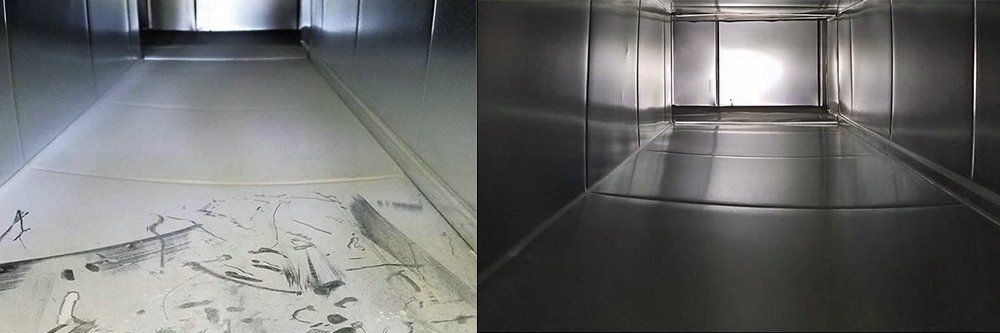
Our technicians can show you before-and-after photographs of the areas we clean so you can see the results for yourself.
For suspected mold, remember that duct cleaning is only one potential part of the solution. The source of moisture and the type of affected material also need to be addressed appropriately.
[AIR DUCT CLEANING IN GRAND RAPIDS →]
Your Grand Rapids Duct Cleaners

Grand Rapids Duct Cleaners
You might also like