Air Duct Sealing: Signs of Leaky Ducts & What to Do
Your furnace or air conditioner can be working perfectly—and you can still lose some of the heated or cooled air before it reaches the rooms in your home.
The problem may be the ductwork.
Gaps, poorly sealed joints, disconnected sections and damaged ducts can allow conditioned air to escape as it travels through the system.
According to ENERGY STAR, in a typical home, about 20% to 30% of the air moving through the duct system can be lost through leaks, holes and poorly connected ducts.
That doesn't mean every home needs duct sealing.
But when meaningful leakage is present, properly sealing and repairing the duct system can improve how effectively it delivers conditioned air throughout the house.
Here's how to recognize potential problems, what duct sealing actually involves and when you may be able to tackle the job yourself.
What Is Air Duct Sealing?
Air duct sealing means closing unwanted openings in the HVAC duct system so air travels where it's supposed to go.
Potential leakage points include:
- Joints between sections of ductwork
- Seams
- Connections at trunks and branches
- Supply and return connections
- Connections at registers and grilles
- Connections near the air handler
- Other holes or gaps in the duct system
A small leak at one connection might not seem significant.
But a duct system can contain many connections. Leakage across the entire system can add up.
Why Do Air Ducts Leak?
Ductwork isn't necessarily one continuous piece.
A typical system may contain main trunks, branches, elbows, fittings, boots, plenums and flexible duct sections connected together.
Over time, problems can develop.
Connections Can Separate
Sections of ductwork can become loose or disconnected.
Sealing Materials Can Fail
Older sealing materials may deteriorate or separate from duct surfaces.
Flexible Ductwork Can Be Damaged
Flex duct can become crushed, kinked, torn or disconnected.
Ductwork Can Be Physically Damaged
Work performed in an attic, crawlspace or basement can accidentally damage accessible ductwork.
Installation Problems Can Leave Gaps
Some leakage may have existed since the duct system was originally installed.
The appropriate solution depends on what's actually wrong.
A small leaking seam needs a very different repair from a completely disconnected duct.
7 Signs Your Air Ducts May Be Leaking
You can't diagnose duct leakage simply from how a house feels, but certain conditions can give you a reason to investigate.
1. Visible Gaps or Loose Connections
This is the clearest evidence.
If accessible ductwork has obvious gaps, separated connections or holes, it needs attention.
2. A Disconnected Duct
A completely or partially disconnected supply duct can dump conditioned air into an attic, crawlspace or other area instead of delivering it to the intended room.
3. Damaged Flexible Ductwork
Look for sections that are visibly torn, crushed, severely kinked or disconnected.
4. One Room Has Weak Airflow
A leaking or damaged supply duct can reduce the amount of conditioned air reaching a particular register.
But weak airflow has other possible causes, so don't assume leakage is responsible without investigating.
5. Certain Rooms Are Difficult to Heat or Cool
A room receiving less conditioned air than intended may remain warmer or colder than the rest of the house.
Again, duct leakage is only one possible explanation.
Insulation, windows, equipment sizing, system balancing and other HVAC problems can cause similar symptoms.
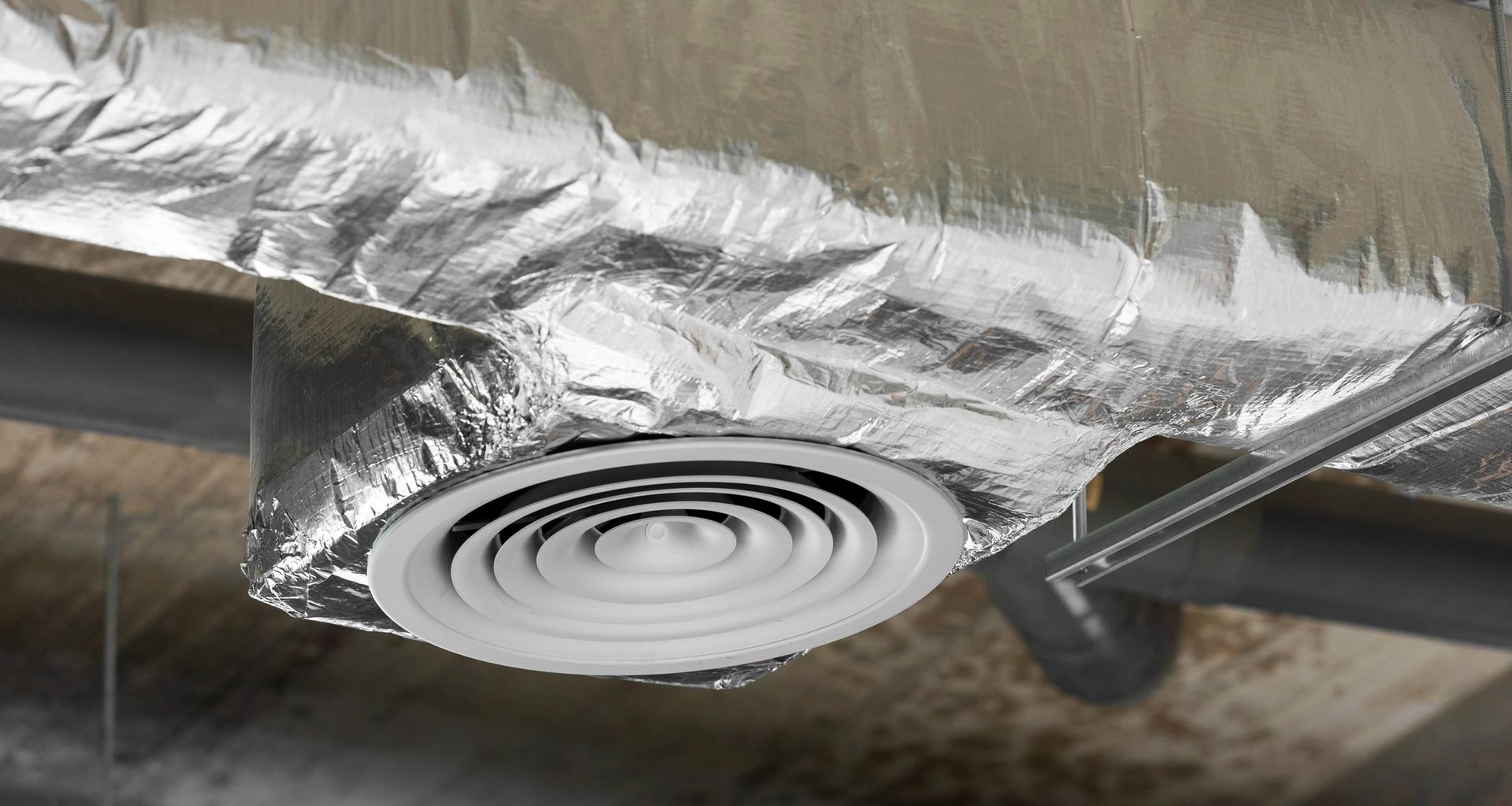
6. Your Ducts Run Through Unconditioned Areas
Ducts in an attic, crawlspace, garage or unfinished area deserve particular attention because air lost from those ducts isn't simply escaping into another conditioned room.
7. Heating and Cooling Costs Seem Unusually High
Duct leakage can contribute to wasted heating and cooling energy.
But high utility bills alone don't prove your ducts are leaking.
Weather, thermostat settings, insulation, HVAC equipment and many other factors affect energy consumption.
Why Are Leaky Ducts a Problem?
The simplest answer is:
You're heating or cooling air and then failing to deliver all of it where you intended.
Suppose a supply duct passes through an unconditioned attic.
Your air conditioner cools the air, the blower pushes it into the supply duct—and some escapes through leaks before reaching the rooms below.
That wastes some of the work the HVAC system has already performed.
Leaks on the return side can create a different problem. Rather than losing conditioned air, a leaky return located in an unconditioned area can potentially draw unwanted air into the duct system.
That's why both the supply and return sides of a duct system matter.
Can Sealing Air Ducts Lower Energy Bills?
Potentially.
Reducing duct leakage can reduce unnecessary heating and cooling losses.
ENERGY STAR identifies duct sealing as an energy-efficiency improvement and estimates that typical homes lose approximately 20% to 30% of duct-system airflow through leaks, holes and poor connections.
But don't translate that into:
“Duct sealing will cut your energy bill by 30%.”
That's not what the statistic means.
Your actual results depend on:
- How much your ducts leak
- Whether the leakage is on the supply or return side
- Where the ducts are located
- How much ductwork runs outside conditioned space
- HVAC efficiency
- Insulation and air leakage elsewhere in the house
- Climate
- Thermostat settings
The reason to seal ducts is because you've identified meaningful leakage—not because someone promised a particular percentage of savings.
Can Duct Sealing Help With Hot and Cold Rooms?
Sometimes.
If a room isn't receiving enough conditioned air because its duct is leaking or disconnected, repairing the duct can improve delivery to that room.
But duct leakage isn't the only reason for uneven temperatures.
Other possibilities include:
- Poor system balancing
- Inadequate insulation
- Air leakage through the building
- Window performance
- Incorrect equipment sizing
- Restricted airflow
- Duct design problems
If the duct itself is intact and properly sealed, adding more sealant isn't going to solve one of those other problems.
How Are Air Ducts Sealed?
The appropriate method depends on the type of duct and the problem being repaired.
For accessible duct joints and seams, commonly recommended sealing materials include:
Duct Mastic
Mastic is a sealant designed for HVAC ductwork.
It's applied over appropriate joints, seams and gaps to create a durable seal.
Metal-Backed Foil HVAC Tape
Certain metal-backed tapes designed and rated for HVAC duct sealing can be appropriate for particular applications.
This is very different from ordinary cloth-backed household “duct tape.”
Repair Before Sealing
Sealant can't fix every duct problem.
A disconnected section should be properly reconnected.
Crushed or badly damaged ductwork may need repair or replacement.
Damaged flex duct may require a different solution from a small seam in rigid metal ductwork.
The first step is determining what kind of problem you're actually dealing with.
Why Isn't Regular Duct Tape Recommended?
This is one of the stranger naming problems in home maintenance:
The product everyone calls “duct tape” generally isn't what you should use to permanently seal HVAC ducts.
ENERGY STAR recommends mastic sealant or appropriate metal-backed foil tape for accessible duct leaks and specifically warns against ordinary duct tape because it isn't sufficiently long-lasting for the job.
If you're buying tape for HVAC ductwork, don't choose it simply because the package says “duct tape.”
Use a product specifically designed and rated for the application.
Can You Seal Air Ducts Yourself?
Some duct sealing can be a reasonable DIY project.
If you have accessible ductwork in an unfinished basement, attic or crawlspace and can clearly see a leaking joint, you may be able to seal appropriate areas using proper materials.
ENERGY STAR recommends starting with accessible ductwork in areas such as:
- Attics
- Crawlspaces
- Unfinished basements
- Garages
Pay particular attention to connections and visible leaks.
But DIY work has limits.
When Should You Call a Professional?
Professional help makes more sense when:
- Ductwork is difficult to access
- Sections are disconnected
- Flexible duct is damaged
- Ductwork needs physical repair or replacement
- You suspect extensive leakage
- You're not sure what's causing the airflow problem
- Problems involve multiple areas of the system
- The work is near HVAC equipment you aren't comfortable servicing
A professional can also distinguish between a leak that needs sealing and ductwork that needs an actual repair.
[DUCT SEALING & REPAIR IN GRAND RAPIDS →]
What About Duct Leakage Testing?
Not every leak can be found by simply looking at the ductwork.
Professional duct leakage testing can be used to quantify how much air is leaking from a duct system.
This can be particularly useful in situations where a measured leakage rate is required or where the extent of leakage needs to be evaluated more precisely.
However, a homeowner doesn't necessarily need a formal leakage test to recognize obvious problems such as a disconnected duct or a clearly visible open joint.
And because testing methods and equipment vary, ask a contractor exactly how they evaluate leakage rather than assuming every duct-sealing service includes pressure testing.
Should You Seal Ducts Before Insulating Them?
Yes, when both are being addressed.
Insulation and sealing solve two different problems.
Duct sealing reduces air leakage.
Duct insulation reduces heat transfer through the walls of the duct.
Putting insulation over a leaking duct doesn't fix the underlying air leak.
ENERGY STAR recommends sealing accessible ducts first and then insulating ducts in unconditioned spaces.
Do All Air Ducts Need Insulation?
Not necessarily.
Location matters.
Insulation is especially important when ductwork travels through unconditioned areas such as:
- Attics
- Crawlspaces
- Garages
- Other spaces outside the home's conditioned envelope
The insulation reduces unwanted heat gain or heat loss through the duct walls as conditioned air travels through those spaces.
Ducts located entirely within conditioned space have different circumstances.
Duct Sealing vs. Duct Insulation
Here's the simplest way to remember the difference:
A leak lets air escape through an opening.
Poor insulation lets heat move through the duct material.
A duct can have one problem, both problems or neither.
That's why sealing and insulation shouldn't be treated as interchangeable services.
Duct Sealing vs. Air Duct Cleaning
These are also completely different services.
Air duct cleaning removes accumulated debris and contamination from inside an HVAC system when cleaning is warranted.
Duct sealing closes unwanted air leaks.
Cleaning a leaking duct doesn't seal it.
Sealing a dirty duct doesn't clean it.
You also don't automatically need one service simply because you need the other.
If a duct-cleaning company recommends sealing or repair during a cleaning, ask them to show you the actual problem.
[LEARN WHEN AIR DUCT CLEANING IS NEEDED →]
Duct Sealing vs. Whole-Home Air Sealing
The names sound similar, but the work is different.
Duct sealing closes leaks in the HVAC distribution system.
Whole-home air sealing closes unwanted openings in the building envelope.
Those can include penetrations and gaps around areas such as plumbing, wiring, attic access points and other parts of the structure.
A house can have leaky ductwork, a leaky building envelope, both or neither.
Should You Seal Ducts Before Replacing Your HVAC System?
It's worth evaluating the duct system.
Installing new heating or cooling equipment doesn't repair leaking or disconnected ductwork.
ENERGY STAR recommends addressing significant duct leakage as part of improving overall heating and cooling performance.
If you're investing in new equipment, it's reasonable to make sure the distribution system carrying its conditioned air is also functioning properly.
Frequently Asked Questions About Air Duct Sealing
How long does duct sealing last?
There isn't one lifespan for every duct-sealing job. Longevity depends on the duct material, sealing method, quality of the installation, environmental conditions and whether the ductwork moves or becomes damaged later.
Can I use spray foam to seal my ducts?
Don't assume general-purpose spray foam is appropriate for duct joints. Use materials intended for the specific HVAC application and follow applicable manufacturer instructions and building requirements.
Is foil tape the same as duct tape?
No. Metal-backed foil HVAC tapes designed for duct sealing are different from ordinary cloth-backed household duct tape.
Can you seal flexible ducts?
Flex duct connections can be sealed appropriately, but torn, crushed or badly damaged flexible duct may require repair or replacement rather than simply covering the damaged area with sealant.
Can duct sealing fix weak airflow?
It can help when airflow is being lost because of leaking or disconnected ductwork. Weak airflow can also have many other causes, so the underlying problem should be identified first.
Does duct sealing improve indoor air quality?
Sealing return-side leaks in unconditioned areas can reduce the possibility of the duct system drawing unwanted air and particles from those areas.
However, duct sealing shouldn't be marketed as a treatment for allergies, asthma or other health conditions.
How do I know whether I need duct sealing or duct repair?
A small leak in otherwise sound ductwork may simply need sealing. Disconnected, crushed, torn or otherwise damaged ductwork may require repair or replacement.
Professional Duct Sealing & Repair in Grand Rapids
Some duct leaks are straightforward DIY projects.
Others aren't.
If your ductwork is damaged, disconnected, difficult to access or has multiple areas that need attention, we provide professional duct sealing and duct repair throughout Grand Rapids and West Michigan.
We can address leaking connections as well as damaged and disconnected ductwork rather than simply applying sealant over a problem that requires an actual repair.
We have worked with residential and commercial duct systems throughout West Michigan for more than 20 years.
Call 616-208-4445
[DUCT SEALING & REPAIR IN GRAND RAPIDS →]
Your Grand Rapids Duct Cleaners

Grand Rapids Duct Cleaners
You might also like